


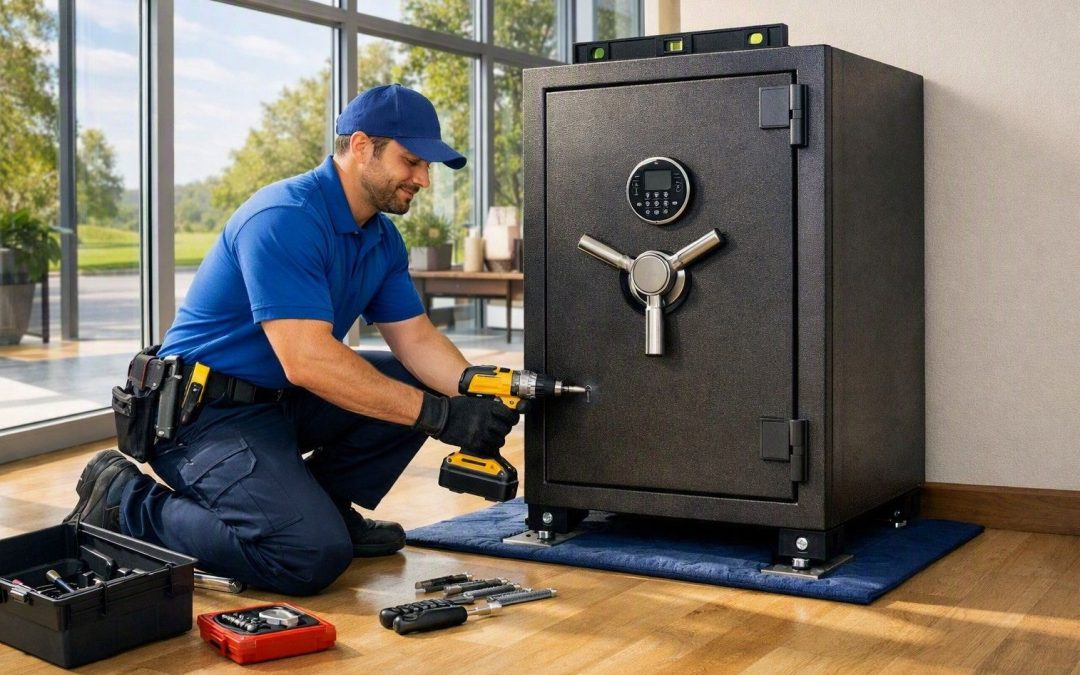
Buying a safe is only half the job. How it’s installed determines whether it actually protects your valuables — or gives you a false sense of security. Faced with the cost of hiring a specialist, many Sydney homeowners and business owners are tempted to fit their safe themselves. It can seem simple enough: bolt it down, and you’re done.
In reality, safe installation is more technical than it looks. Weight, wall or floor material, anchoring method and access all affect whether a safe will resist forced entry — or simply tip over or be carried away. Below, we break down the real pros and cons of DIY versus professional safe installation services, the most common mistakes DIY installers make, and how to decide which approach is right for your home or business.
DIY Safe Installation: Pros and Cons
Pros:
1. Cost Savings Installing a safe yourself avoids the cost of hiring a professional. For homeowners on a tight budget, or businesses installing a single small safe, this can look like an attractive short-term saving.
2. Flexible Timing DIY installation means you’re not waiting on a technician’s availability. You can fit the safe whenever it suits you, without booking in advance.
3. Sense of Accomplishment For confident DIYers, successfully installing a safe can feel satisfying — and it can offer a better understanding of how the unit and its anchoring work.
Cons:
1. Lack of Expertise Safes range from around 20kg document safes to commercial and government-grade units weighing over a tonne. Without experience assessing wall cavities, concrete floors or load-bearing points, it’s easy to choose the wrong anchoring method or the wrong location entirely — mistakes that can go unnoticed until the safe is tested by an intruder.
2. Time-Consuming and Tool-Intensive Correctly anchoring a heavy safe into concrete or masonry requires specific drilling and fixing equipment that most households and small businesses simply don’t have on hand, turning a “simple” job into a lengthy and frustrating one.
3. Limited Support Many safe manufacturers require professional installation to keep the product warranty valid. A DIY fitting can quietly void that cover, leaving you unsupported if a fault develops later.
Common Mistakes in DIY Safe Installation
Most DIY safe installation problems fall into the same handful of traps. Understanding them makes it clear why professional fitting is worth the investment.
Improper Anchoring This is the single biggest risk. A safe that isn’t bolted into a genuinely solid substrate — using fixings rated for its weight and the material it’s mounted into — can be pried, tilted or simply carried out the door by an intruder. Concrete floors, hollow walls, and tight cavities all require different anchoring approaches, and getting it wrong undermines the entire purpose of owning a safe.
Voided Manufacturer Warranties Many safe brands specify that installation must be carried out by a qualified installer to keep the warranty active. A DIY install — even a well-intentioned one — can invalidate that cover, leaving you paying out of pocket for any mechanical or lock fault down the track.
Reduced or Invalidated Insurance Coverage Insurers assessing a claim for stolen or damaged valuables will often ask how the safe was secured. A safe that wasn’t professionally anchored, or wasn’t installed to the standard specified in your policy, can result in a reduced payout — or a declined claim altogether.
Choosing the Wrong Location DIY installers frequently prioritise convenience over security, placing a safe somewhere easy to access rather than somewhere concealed, structurally sound and resistant to leverage attacks.
Underestimating Weight and Handling Risk Beyond security, there’s a practical safety issue: safes are heavy, dense and awkward to move. Attempting to shift or position one without the right equipment risks injury and property damage before the anchoring stage even begins.
Positioning a safe correctly and anchoring it properly the first time is far safer — for your property, your insurance position and your peace of mind — than trying to fix a poor DIY job later. This is exactly the gap that professional safe installation in Sydney is designed to close.
Professional Safe Installation: Pros and Cons
Pros:
1. Expertise and Knowledge Professional installers assess the property first — concrete floors, hollow walls, tight cavities and awkward access points are all accounted for before a single bolt goes in. Industry-approved anchoring methods are then applied to maximise resistance against forced entry.
2. Compliance with Insurance Requirements A correctly installed safe, matched to the manufacturer’s specifications, gives you a stronger position if you ever need to make an insurance claim.
3. Tailored Solutions Every property is different. A qualified installer can recommend the best method and location for your specific safe model, rather than applying a one-size-fits-all approach.
4. Consistent, Trusted Workmanship For property managers overseeing multiple sites, and for families protecting heirlooms and important documents, consistency matters. Tidy workmanship and clear aftercare guidance mean you’re not left guessing whether the job was done properly.
Cons:
1. Cost Professional installation is an added expense compared to doing it yourself — though this needs to be weighed against the cost of a failed installation, a voided warranty or a declined insurance claim.
2. Scheduling You’ll need to work around the installer’s availability, which may mean a short wait compared to fitting the safe yourself immediately.
Which Option Is Best for You?
For a very small, lightweight document safe in a low-risk setting, a careful DIY installation might be manageable. But for anything heavier, wall- or floor-mounted, or holding items of real value — cash, firearms, documents, jewellery or business assets — professional installation is the safer route. It protects the manufacturer’s warranty, supports your insurance position, and ensures the safe is anchored to resist the kind of attack it was designed for.
All Secure Safe Installations has serviced homes, businesses and government sites across Sydney, Greater NSW and the ACT for over 13 years, fitting safes from 20kg document safes through to 2700kg commercial and government-grade units, plus strongroom door installation and removal. Every property is assessed individually, so the anchoring method matches both the safe and the space it’s going into.
If you’re also planning to move an existing safe rather than install a new one, the same risks apply — incorrect handling can damage the unit, the property, or both. Our safe relocations service in Sydney uses purpose-built trolleys, rigging and lifting gear to move safes weighing several hundred kilograms safely, with doorframes, stairwells and tight corners planned for in advance.
Get Your Safe Installed Right the First Time
Skip the risks of DIY installation — improper anchoring, voided warranties and reduced insurance cover aren’t worth the short-term saving. Contact All Secure Safe Installations today for a free, obligation-free quote on professional safe installation in Sydney, and get the peace of mind that comes with knowing your safe is fitted to last.